
We’ve moved our podcast! You can find our episodes right over here.

We may want fewer emergencies, yet the clarity of purpose and satisfaction of solving an urgent problem can be compelling. Erica D’Eramo explores what draws teams into workplace firefighting, how organizations reinforce the pattern, and what it takes to give prevention and steady performance the attention they deserve.

When the stakes are high, people expect clear, decisive leadership. Asking for input can feel complicated when everyone expects you to have the answer. Drawing on offshore operations and emergency management training, Erica D’Eramo explores how humble inquiry supports that responsibility. Learn how to ask focused questions, explain why you’re seeking input, and make decision ownership explicit so your team can contribute the context you need.

Curated book recommendations are one of my love languages. For our August theme of Powerful Questions, I’m sharing six books that have shaped how I think about curiosity, listening, communication, and the questions that help people think more deeply.

Open-ended questions can create insight, curiosity, and better conversations, but not all of them work the same way. Here’s why “why?” can sometimes trigger justification or defensiveness, and how shifting to “what” or “how” can lead to more productive inquiry.

By listening to patterns across hundreds of coaching conversations and creating space for reflection, Two Piers is clarifying how its work connects individual growth, team effectiveness, and organizational systems.

Strategic thinking needs more than uninterrupted focus. In the final installment of our “Listening for the Signals” series, we explore how unstructured time helps our brains connect ideas, work through problems, and create the mental space leaders and organizations need to move beyond constant tactical execution.

Nearly every time a client cries during a coaching session, the tears come with an apology. But emotion is not out of place in coaching, and it does not automatically turn the conversation into therapy. Tears may simply signal that we’ve brushed up against something important, even when we don’t yet know exactly what that is.

When we say “I just need to,” we may be flattening a complex challenge into a simple task. That little phrase can be a clue that something deeper needs curiosity, not self-criticism.

This last day of 2025 has been a sunny one here in Maine. Sunny and cold. For the past week and a half, Two Piers has been closed for the holidays. As many people experience, it can take a week or more to actually feel the benefits of a break. So as I watch the ice floes drift along the mirror-flat Kennebec River, I feel like I am finally accessing some of the creative space we talk about so often on this blog. The space we need to think strategically and with vision.
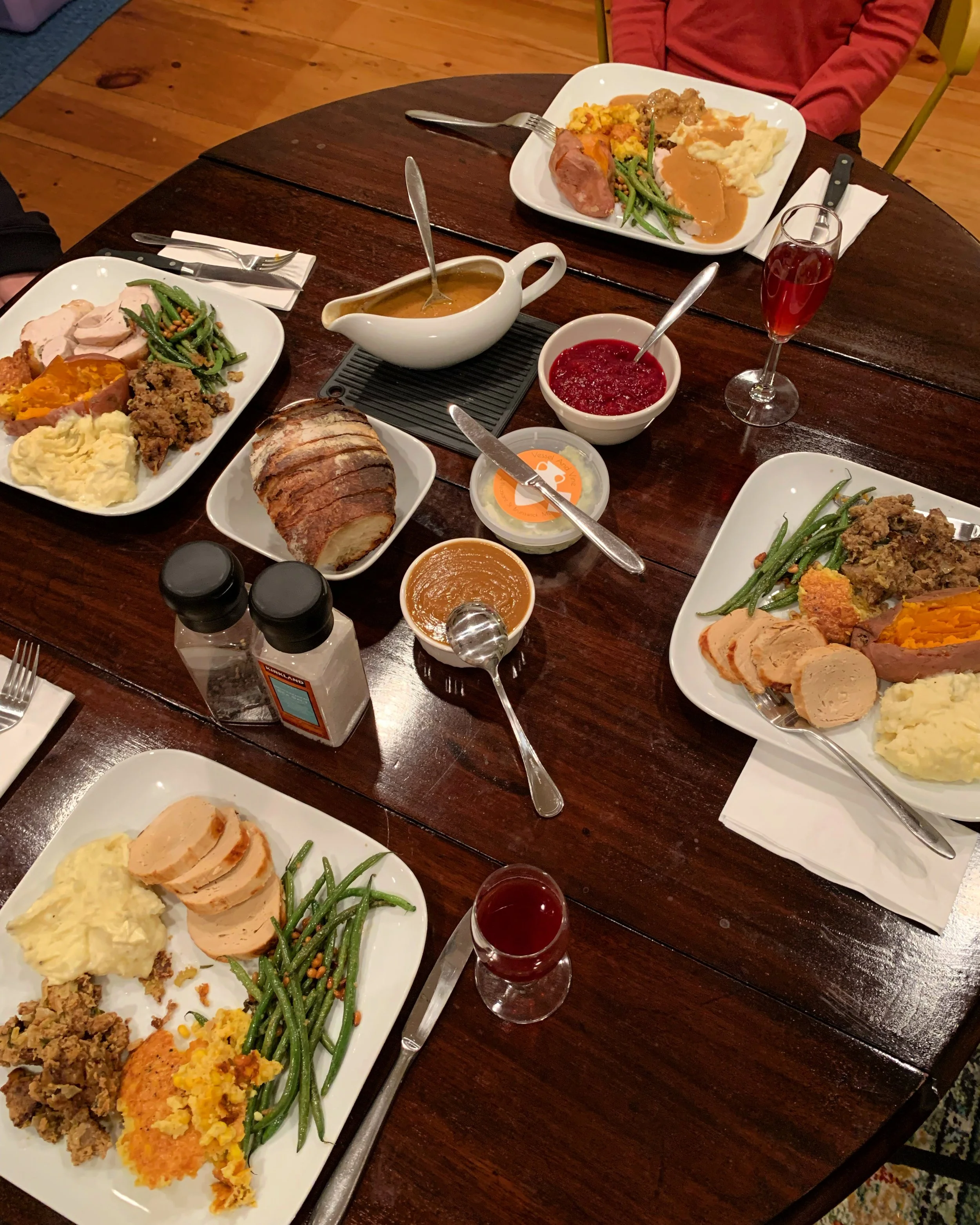
Thanksgiving can be a complicated holiday. The history is whitewashed. The family dynamics can be messy. The expectations to perform warmth and connection are real. And the intense barrage of consumerist messaging can be absolutely exhausting.
And yet… it remains my favorite holiday of the year.

‘Tis the spooky season, y’all. The “Performance Cycle Season.” Whether this is the “mid-year” check-in point, or the year-end rack-and-stack exercise of deciding who gets a slice of the bonus pie, it’s that time of year when folks are doling out feedback and assigning ratings. The performance cycle is often viewed as a necessary evil: administrative, exhausting, and of low value. Something leaders try to survive rather than leverage.

Resilience is one of those concepts that gets tossed around a lot in leadership circles. Too often, it’s boiled down to toughness, grit, or the ability to “power through.” True resilience, however, is NOT about grinding ourselves into the ground. Instead, it’s about adaptability, responsiveness, and sustainability.
As both a coach and a former engineer, I can’t help but see the parallels between how we talk about resilience in leadership and how it’s defined in material science.
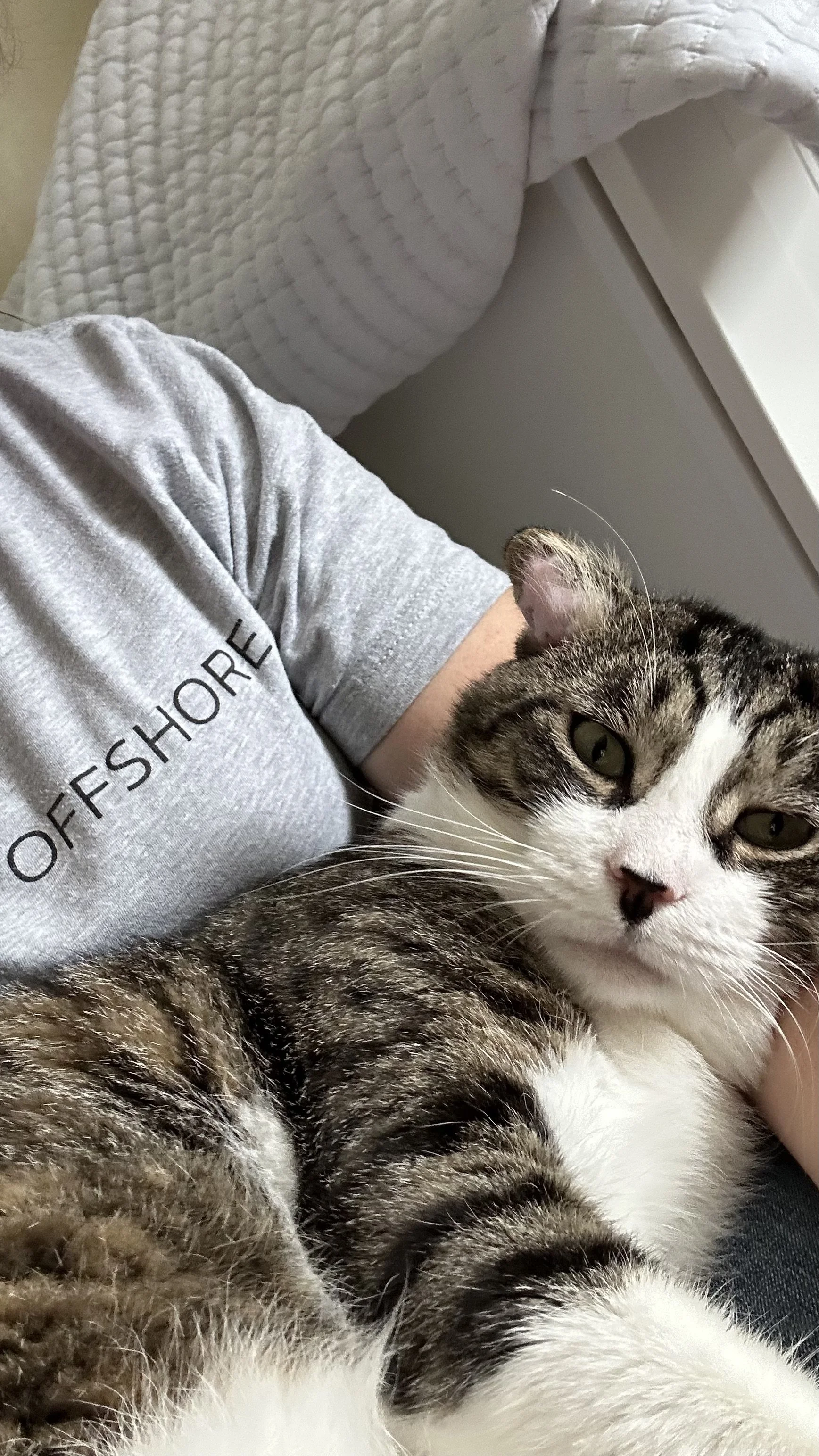
In Part 1, we explored how safety and compassion allowed two foster cats, Ophelia and Mr. Twisty, to reveal who they truly were, and how that mirrors the way humans behave under pressure. In Part 2, we unpacked how confidence is cultivated and how advice like “fake it till you make it” often undermines the very self-assuredness it aims to promote.
Now, in this final part, we turn our focus outward: How do our perceptions shape performance? What power do we hold, as leaders, mentors, colleagues, or community members, to either cultivate confidence or quietly diminish it?

In Part 1, we explored how patience, curiosity, and safety can allow an animal—or a human—to reveal their full self. We saw how behavior under stress isn't a fixed identity, and how presence and belief can transform outcomes.
In this installment, we shift from observation to introspection. What does it actually take to build confidence? And what well-intended advice might be quietly eroding it?

We’re embarking on a journey in this three-part series: from animal fostering to positive psychology, from Greek mythology to quantum physics. You might be wondering what all of these things have to do with confidence, compassion, and the power of perception. I assure you: they’re all connected.
Let’s begin with two stories about real cats. (We’ll get to Schrödinger’s hypothetical feline later.)

"It’s just easier if I do it myself."
This is a common refrain that comes up with my coaching clients, whether I’m working with an overwhelmed parent, a startup founder, or a C-suite leader. Most of us don’t think of ourselves as micromanagers or needing control. We just care and want things done well. In many cases, we’ve been burned before. Perhaps we have a pile of evidence that we can’t or shouldn’t rely on others. How often have we heard the tired cliché (often attributed to Napoléon Bonaparte*): “If you want a thing done well, do it yourself.”

This is a supplemental video of our interactive webinar. Check out Part 1 and Part 2 of our blog series.

In Part 1 of this series, we explored the myriad benefits of a coaching culture and how it creates a ripple effect throughout an organization. In Part 2, we explore the “how” of implementing and embedding a coaching culture within your organization.

In today's climate of financial uncertainty and organizational belt-tightening, employee development is often at risk of being cut. The irony? It's precisely during these challenging times that targeted and strategically implemented coaching delivers its greatest value.

I watched my boss hurriedly hit the mute button. We were onboard a floating production storage and offloading (FPSO), floating in the Atlantic Ocean, and dialed into a large international call with operations leaders from around the world.
“Welp, I messed that one up! Yikes.” He chuckled and shook his head. I stood by his desk, transfixed, watching in awe as he let his faux pas roll right off his back.

When asked what my greatest strength is, I can answer quickly. It’s curiosity. This is also one of the core values I hold dear to my heart. As a child, my curiosity was a double-edged sword. I took apart things that couldn’t be put back together again. I found myself in trees that I couldn’t quite climb down from. I asked far more questions than my Sunday School teachers would have preferred. My bug and rock collection rivaled small museum installations. Perhaps my parents thought it would wear off with childhood, but it turns out that my curiosity was there to stay.

It’s January: The season of goal setting, good intentions and grand resolutions. It’s a fresh start to a new year and an opportunity to re-envision the future we’d like to build for ourselves. January is the month of new gym memberships, new app downloads and new habit trackers.
It makes sense that many businesses run on a calendar year and use this annual cadence to set performance targets. Yet the convention of setting personal goals at the beginning of the year introduces a host of challenges for us humans.

You may be hearing a lot these days about the importance of mentorship programs, particularly as we work to close opportunity gaps and pull-through talent representative of our communities. You may also be hearing a lot about professional coaches and perhaps have even considered working with one. Maybe you’ve been offered one through your workplace. January is National Mentoring Month, and we figured this would be a good time to provide a refresher.

It's the most wonderful time of the year! 🎶 Ehem. You know, the time when we get to have genuine and deeply insightful conversations between managers and direct reports about what went well and where we can grow next year.
Oh. Is that not how the annual performance cycle feels to you?
Well you're not alone. Plenty has been written and researched in terms of the ineffectiveness (and literal harmfulness) of year-end performance conversations. Even the Society of HR Managers gives them a failing grade.

So often, when we speak of resilience, we view it in terms of the individual. In reality, the likelihood of a resilient outcome depends on both individual, internal factors and external factors outside of a person's direct control.

The fourth quarter is in full swing and the end of the year is within sight. This is an excellent time to take stock of where our time and energy are currently being invested as we look ahead to 2024. In Part I, we discussed the importance of setting boundaries around our commitments to ward off burnout and, importantly, to be more present and joyful in the activities that we do take on. I introduced a basic framework:
Less adding,
More subtracting, and
Making the most of what’s retained.

In our ongoing Reclaim the Floor series, we began last week by exploring some of the context and considerations that will set the stage for how we handle interruptions. Before we tackle tools and techniques, we’re going to dive a bit deeper into what makes up an interruption.

This month's theme is all about “Finding Our Voice” 🗣
How and when we communicate affects our well-being and our ability to create an impact. Whether we’re expressing our needs in the form of a boundary or handling an interruption at work, our communication is often a pathway to our goals.