
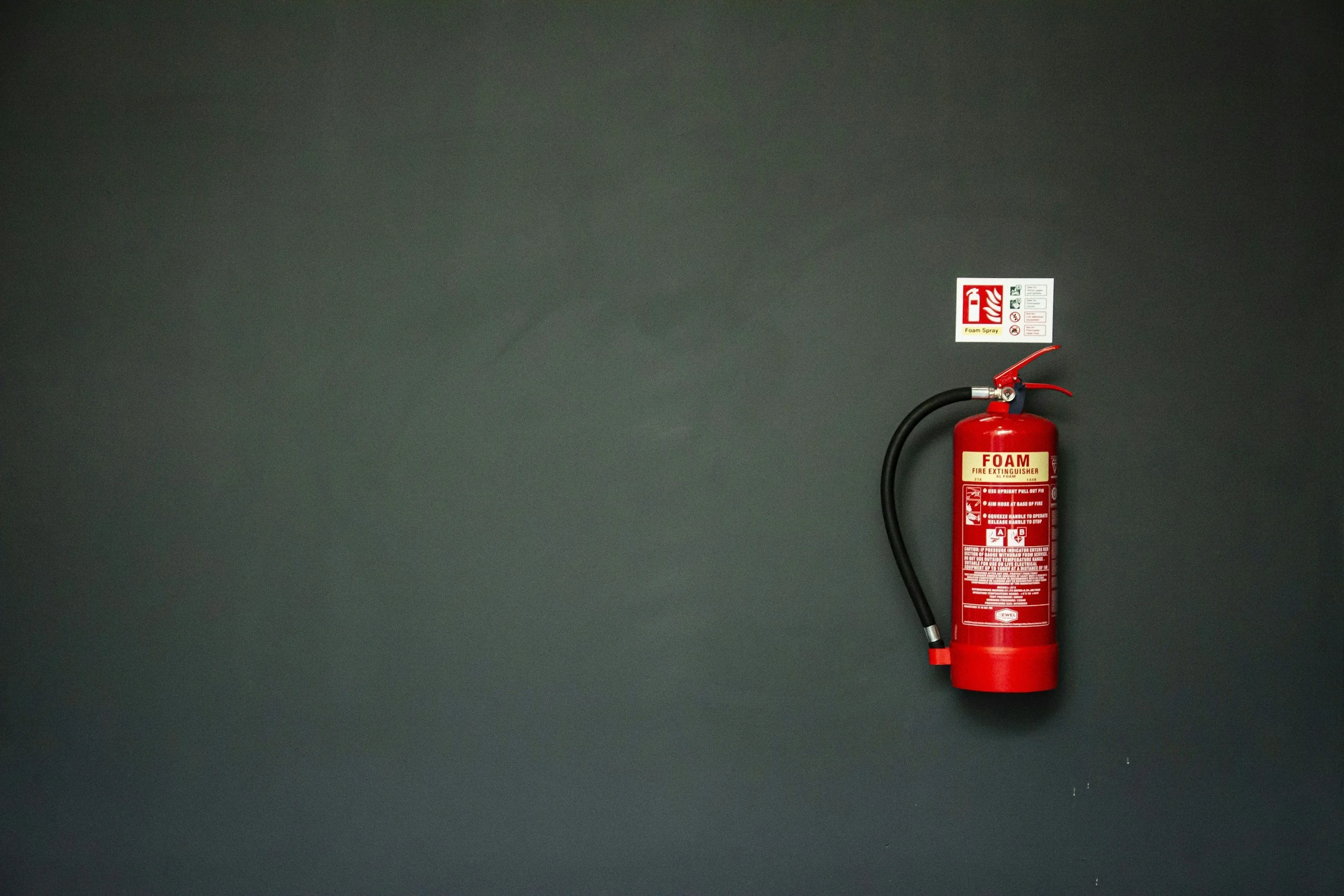
The Lure of Firefighting in Leadership
I suspect many of us have a bit of a love-hate relationship with firefighting at work. Certainly, we’d like fewer emergencies, and perhaps an opportunity to get through the work we’d actually planned. And yet, when an urgent crisis lands in our collective laps, it can bring a clarity of purpose and sense of camaraderie that’s hard to beat.
In a crisis, we know what matters. The noise of competing priorities falls away, the key people come together, and decision-making becomes streamlined and efficient. Even the calendar opens up and all those “required” meetings suddenly drop right off the obligation list.
For those of us who’ve built careers (and perhaps identities) on solving technical and operational problems, there can also be something deeply satisfying when we contribute in a way that aligns with and highlights our strengths. Many of my clients will come to the realization that they thrive under pressure and enjoy the thrill and accomplishment that comes from pulling off a miracle. The fascinating part is when we realize that sometimes, the recurring need for a miracle might be a symptom of our processes, or even, (gasp) of our own making. (My fellow ADHD folks who tend to wait for a deadline - I see you.)
Coming from offshore and remote operations, I genuinely value ability to respond well under pressure. I’m also interested in what happens when that response becomes the most visible, most rewarded, and perhaps most personally satisfying part of our work.
What we find compelling about a crisis
I think it’s worth looking closely at what becomes available during an urgent response. Alongside the pressure, there may be a shared purpose and a level of cooperation that people have been struggling to access in their ordinary day-to-day work.
Someone finally resolves the competing instructions. A team gets the resources it has been requesting. People have permission to focus, and they can see how their contribution connects to the outcome.
I get it. We all want those things from a workplace.
So, when I talk about the lure of firefighting, I’m not asserting that people simply enjoy chaos. I do think that people appreciate what the crisis temporarily makes possible, and I think we should consider what it would take to create those conditions without waiting for something to go wrong.
How we keep ourselves busy putting out fires
Nelson Repenning and John Sterman explored this pattern in their aptly titled paper: “Nobody Ever Gets Credit for Fixing Problems That Never Happened.”
Their work describes a “capability trap,” where pressure to deliver pulls resources away from improvement. As the underlying capability deteriorates, further problems demand more intervention, leaving even less capacity to address what is causing them.
We can imagine how this unfolds around something as common as an equipment or plant outage. Perhaps the team finds an immediate cause, scrambles to get the equipment back online, and agrees that the process or design needs attention. Unfortunately, those recovery efforts consumed the very time, energy, and mental space required make proactive improvements, so that work gets deprioritized and deferred to that magical future state of abundant time and resources. The next plant trip arrives and now the team knows the drill, they focus all their resources, get it back online, and thus the system repeats.
The firefighting efforts are visible, tangible, and bounded, and the people who get things back on track rightfully receive recognition for their efforts, (I’ve even seen clapping). The preparation, discipline, and foresight that allows steady-state operations to continue without incident, however, can be much harder to recognize and acknowledge.
It’s not hard to see how, over time, we end up reinforcing the exact pattern we claim we want to change.
Sidenote: I know that our human reward circuits are probably more complex than those of our feline friends, but I do often think about what happens when we relent and give Mr. Max the Maine Coon his early morning snack when he pesters us at 4am. We reap what we reward…
Learning to notice steady performance
I like the concept of “silent running” when thinking about dependable operations. It invites us to consider all the work happening when there is relatively little drama to report. (I almost used the forbidden Q word. The one whose utterance summons a plant upset. You know the one I mean. It ends in “uiet.”)
Reliable and disciplined operations should be like government. When it’s working well, we barely notice that it exists. It should be nice and boring. So how do we maintain excitement and focus on the boring?
High-reliability principles emphasize continued attention to emerging problems, including during periods without incidents. People remain alert to small changes and pull lessons from both the leading indicators as well as the successes.
That means “silent running” still requires plenty of conversation. We want people raising concerns and sharing what they notice. And we need to understand whether the work is proceeding smoothly because the groundwork is sound or because there are superhuman feats regularly occurring amongst a few human single-points-of-failure. (Or worse, because the reporting of weak signals is simply going underground.)
We want to foster early indications and resilient systems at the plant, process, procedure, and people levels.
Giving prevention a spot on the priority list
It’s easy to say that prevention is valued. But the real values of an organization are evidenced not by its words but by where it invests its resources.
Instructing an overloaded team to “be more proactive” is just straight up ineffective. If we want team members to proactively address existing vulnerabilities and future risks, we need to decide what will be deferred, what support they’ll have, and whether they have the authority to change the conditions involved.
We can also become more specific about who and what we recognize. When someone catches a problem early, improves a handover, or removes a recurring source of confusion, we should acknowledge reward that work in a way that honors the ownership shown, just as we would for those who step up in a crisis.
The people who respond well to emergencies deserve appreciation. And, the whole team deserves a serious effort to reduce the likelihood of having to repeat those emergencies.
When reviewing progress, it helps to look at recurring problems, rework, and the amount of unplanned intervention required. A falling number of reports deserves some curiosity too. We want to understand whether conditions have improved and whether people still feel able to tell us when they haven’t.
On the individual level, if we know that urgency, high-stakes, tight deadlines, and pressure are what our brains need to get motivated and focused, my genuine recommendation is to build that into our design rather than fight it. Schedule a meeting to go through the draft with a trusted stakeholder. Set a timer. Tag team it with a colleague. If camaraderie and pressure help you, then find a way to leverage that rather than be beholden to it.
When being needed becomes part of our identity
There’s a personal identity element that shows up as well, especially with my clients who are the “go-to” folks in a crisis. If we’ve built our reputation on being the person who can sort things out, there’s a chance that a silent-running team can actually be a threat to our sense of value.
There’s also a level of deferred satisfaction or delayed results. Helping someone else develop their judgment and building more robust capability can take longer than stepping in ourselves. The results may also be less visible or tangible, particularly when that capability and independence allows work to proceed without our direct involvement.
Our podcast conversation about asking better questions explored this shift toward supporting other people’s thinking and ownership. It’s relevant here too, especially when the leader has become the default answer to every difficult problem.
Put this into practice with your team
At your next team meeting, consider choosing one issue that has required repeated intervention and ask:
What would it look and feel like to solve this?
What keeps making this urgent?
What have we already learned about the underlying conditions?
What would need to change for us to address them?
What will we stop or defer to make room for that work?
As I discussed in From Signals to Strategy, leadership development involves both people and the systems surrounding them. At Two Piers, we help leaders and teams assess these patterns and put changes into practice through coaching, team development, and organizational consulting.
If recurring firefighting is consuming your team’s capacity, book a complimentary consultation. We can explore what is propagating the pattern and what type of support could help you create more sustainable ways of working.